14 May, 2010

Surya Grahan

A Total Solar Eclipse – Purna Surya Grahan – will take place on July 11, 2010. It is not visible in India. The eclipse will be visible only in parts of South America, Cook Islands, French Polynesia etc. Hindu Panchangs and calendars have ignored the Suryagrahanam. As per the India Time the eclipse will be taking place from 23:45:00 hrs on July 11, 2010 to 02:20:00 on July 12, 2010. The GMT or Universal Time of the Eclipse is from 18:15 UT to 20:52 UT


According to NASA, the Suryagrahan on July 11 is a ‘Total Solar Eclipse’ and Moon's umbral shadow crosses the South Pacific Ocean where it makes no landfall except for Mangaia (Cook Islands) and Easter Island (Isla de Pascua). The path of totality ends just after reaching southern Chile and Argentina. The Moon's penumbral shadow produces a partial eclipse visible from a much larger region covering the South Pacific and southern South America.

Usually, Hindus do not perform any work during Surya Grahan and they purify themselves by taking a bath and chants the Ashtakshara Mantra dedicated to Shri Krishna, Lord Vishnu and Shiva. Ashtakshara mantra is ‘Shri Krishna ha sharnam mama.’
Generally most Hindu temples remain closed during the period of solar eclipse and temples reopen on the next day morning after special pujas and rituals. Hindus in large number take holy dip in Rivers like Ganges and other tirths especially at Brahmasarovar in Kurukshetra.

This Surya Grahan is of no importance as per Hindu astrology and calendars. There is no need to follow any rules and rituals.
What do Hindus do during Surya Grahan?

There are numerous recording of Surya Grahan, or Solar Eclipse, in Hindu scriptures. The most famous being the Suryagrahan during the famous Mahabharata war. Usually, Hindus do not perform any work during Surya Grahan and they purify themselves by taking a bath and by chanting mantras. A complete fast is undertaken by many Hindus during the period. In Hindu religion, taking a holy dip at sacred rivers and tirths on the Surya Grahan day is considered highly auspicious.  

The next Surya Grahan is on January 15, 2010.

Ancient sages and texts like Brahman Siddhanta restrict viewing the eclipse – one should look at an eclipse through a cloth or a reflection of it. A pregnant woman should never look directly at an eclipse.

Mantras Chanted during Surya Grahan
Some of the important mantras that are chanted during the Surya Grahan include:

Gayatri Mantra

Ashtakshara Mantra dedicated to Shri Krishna. Ashtakshara mantra is ‘Shri Krishna ha sharnam mama.’ Astakshari Mantra is also taken as ‘Om Namoh Narayan Na Yah.’
Mahamrityunjay Mantra is also chanted during eclipse.
Other mantras chanted are Surya Kavach Strotra and Aditya Hridaya Strotram

 It is important that one chants mantra, or remember god in any form, at this time to keep calm and the aura clean.

Hindu Temples Remain Closed

All Hindu Temples remain closed during Surya Grahan. Temples open only after proper rituals are performed to get rid of the ill effects of the Surya Grahan. However, some Lord Shiva temples remain open during Surya Grahan as Lord Shiva is considered as ‘Layakara,’ who Himself is an embodiment of darkness.


Fasting During Surya Grahan

Adult Hindus stop eating 12 hours before a solar eclipse. Children, old people and those who are ill stop eating 3 hours before the beginning of a solar eclipse. If the solar eclipse ends after sunset, then people fast during night and consume food only next day morning.
One should not take food at the time of Grahan because it is said that at this time the most harmful rays from the sun can be seen and absorbed. 

Pregnant Woman and Surya Grahan

Normally at the time of Surya Grahan, pregnant women are supposed to not come out of the house, with no sunlight entering either by doors or windows. This is to avoid harmful rays.

Story of Surya Grahan and Chandra Grahan in Hindu mythology

Surya Grahan, solar eclipse, is widely mentioned in the Holy Scriptures of Hinduism. There is also an interesting myth regarding the occurrence of Surya Grahan. It happened during the Samdura Manthan (churning of ocean) episode in the Puranas. Rahu (Demon) and Mohini, an incarnation of Lord Vishnu, are the main characters in the incident.

The Amrit (elixir) that was obtained from churning the ocean was cunningly stolen by Ausras (Demons). Lord Vishnu took the form of Mohini, a beautiful damsel, to win back the Amrit. She achieved her mission by enamoring the Asuras, they fell for her beauty and handed over the Amrit to her.
Mohini returned to the Devas and started distributing it. Devas sat in a line and mohini gave a portion to each one of them. Rahu, an Asura, who found out that they were tricked took the form a Deva and sat in the line between Chandra (Moon God) and Surya (Sun God).

When Mohini approached Rahu, Chandra and Surya realized that Rahu was not one among them and soon identified him as an Asura. Mohini soon severed the head of Rahu which flew into the sky. Rahu’s, depicted in the form of a Snake head occasionally, continued to live and decided to avenge Surya and Chandra.

Thus periodically Rahu engages in a war with Surya and Chandra. The Chandra Grahan (Lunar eclipse) and Surya Grahan (Solar eclipse) takes place when Rahu gobbles up Moon and Sun respectively. Surya and Chandra then fights to free themselves.

Holy Bath in Brahma Sarovar in Kurukshetra During Surya Grahan

Millions of Hindus take a holy dip the famous Brahma Sarover at Kurukshetra in Haryana on the Surya Grahan or solar eclipse day. The Brahma Sarover located here is a highly sacred ‘Tirth’ and it is believed that Lord Brahma began the creation process from here. Lord Krishna discussed the Bhagavad Gita with Arjuna on the battle field of Kurukshetra and the greatest battle in epic Mahabharata also took place here.

It is widely believed that to bath in the in Brahma Sarover in Kurukshetra is equal to performing the famous Ashwa Medha Yajna or Yagam mentioned in several Hindu scriptures. During the Surya Grahan period it is a mela like atmosphere in Kurukshetra. It is also said that all the holy waters in the rivers mentioned in the Hindu scriptures flow to the Brahma Sarover Tirth during solar eclipse.
It must be also noted that during the famous 18-day Kurukshetra battle fought in the Mahabharata, on the fourteenth day of the battle a total solar eclipse takes place, which helps Arjuna to kill Jayadratha. This happened with the blessing of Lord Krishna. 

Surya Grahan and Pregnent Women

What Should Pregnent Women Do During Surya Grahan

There is lot of fear among many Hindus regarding Surya Grahan (Solar Eclipse) and Pregnancy. Most people want to know about precautions to be taken during Surya Grahanam. The only precaution that you should take is that you should never look at the Sun directly during the Grahan. As a clear cut solution, ancient seers in Hinduism recommend pregnant women remain indoors during Grahan. The mantra chanted during the period is the Santana Gopala Mantra.
Astrological View Point

Now for those of you believe in astrology, there is a ‘punya kala’ when the Surya Grahan is visible. And people observe fasting during this period. If the Grahan is not visible in the particular region, there is no ‘punya kala’ and there are no restrictions.

There is no restriction in moving around if there is no Surya Grahan in your region. 
Ayurvedic View Point

Some traditions in Hindu religion ask pregnant women to sit or lie down on a mat containing Darbha grass or Kusha Grass. It is also advised to keep some Kusha Grass with the pregnant woman.

Fasting during Grahan

Now there are several Hindu communities that fast (Upvaas) during Surya Grahan. A pregnant woman should take the advice of her doctor before fasting. If you are so particular about fasting, you can fast just during the Surya Grahan period and avoid a complete fast. 

The Use of Metal or Sharp Objects

There is a popular belief that pregnant women should not use sharp metal objects like knife, pins etc during the Grahan period. In simple terms they should not cut anything during the period or should not wear pins etc. Some people suggest that it will be hard to stop the blood flow if there is a cut on the body during the period. But this has no proper scientific backing.


Adhik Mas & Chaturmas


Adhik Mas 

The Hindu calendar is based around the lunar cycle. Since this calendar is based around the phases of the moon, a lunar year lasts for 354 days. This creates a difference of 10-11 days between the lunar and solar years. When this accumulated difference exceeds 29 days, approximately every 3 years, an adjustment is made with an extra month, the Adhik (extra), or Purushottam Mas. The extra month carries the name of the next month.

The concept of Adhika Masa is unique to the traditional Hindu lunar calendars. In 2010 Hindu calendar, there is an Adhika Masam or Adhik Masa or an extra month. This Adhika Masam is from March 30, 2010 to April 28, 2010 as per North Indian Calendar. In Gujarat, Maharashtra, Karnataka and Andhra Pradesh, the Adika Masa is from April 15, 2010 to May 14, 2010. This extra month is known as Adhik Vaishak Maas or Adhik VaishakMahina. It is dedicated to Lord Krishna and as Vaishak is auspicious to Vishnu this makes the extra month in 2010 double auspicious.
So in 2010 there are thirteen months in Hindu Lunar calendar. Apart from the normal 12 months, there is an an Adhik Vaishak Maas.

It must be noted here that there is no Adhika Masam in the calendars followed in Assam, Bengal, Kerala, Orissa and Tamil Nadu as it is based on Solar Calendar.

Why There is an Adhika Masa?

The Hindu calendar is a lunar calendar and is based on the cycles of the Moon. A lunar month is around 29.5 days long. Now, a solar month, that is the usual calendar, is 30 to 31 days.

The lunar year consists of 354 solar days and solar year consists of 365 days. So, as years pass by each lunar month starts earlier to the corresponding solar month. There is a difference of 11 days between the lunar and solar year. In every two or three solar years the difference between the two calendars becomes a full month or around 29 days. To compensate and get the two calendars similar an extra month is added Vasishta Siddhanta, a treatise of Sage Vasishta, says that the Adhika Masa occurs after every 32 months, 16 days and 8 Ghadis. A Ghadi is 24 minutes.


Now, in Andhra Pradesh, Karnataka, Maharashtra and Gujarat the lunar month begins and ends with the new moon or no moon (amavasya). In North India, the lunar month begins and ends with full moon (purnima). 

For an average devotee, the Adhika Masa means some change in the temple celebrations in the States following the lunar calendar. For example, due to the Adhika Masam, there will be two Brahmotsavams in Tirupati this year. And the Adhika Masa is dedicated to Lord Krishna.

Acharya Swamishree presents His niyams to Lord Shree Swaminarayanbapa Swamibapa at the start of Chaturmas 
 
The year Samvat 2060 (2004 CE) is such a year where we have an Adhik Mas. We have 2 Shravan months, the first is the Adhik month, which starts on the 18th July and ends on the 16th August. The annual Shravan month begins on the 17th August.


Chaturmas


The Shravan month falls within the auspicious Chaturmas. The 4 month period between Ashad sud ekadashi (usually falls around July) and Kartik sud ekadashi (October / November) is referred to as the Chaturmas, literally, 4 months. During this time, all disciples will take extra vows such as fasting, scripture recitals, meditation and other religious observances as described by Lord Swaminarayan in the Shikshapatri, sloks 76-78. 

A story is narrated in the Purans about the deity Ekadashi, such named because she emerged from the one of the Lord's indriya. There are 5 gnaan indriya, senses, and 5 karma indriya, the controlling organs of these senses. The mind controls all the organs so is considered the 11th organ. Ekadashi literally means eleven, ek + dash, 1 + 10 = 11. The deity Ekadashi was granted her wish and was allowed by the Lord to reside in his eyes for the duration of the chaturmas. Thus the Lord is said to hibernate during this period. That is why the Ashad sud 11 is also referred to as the Devshayan (dev - Lord, shayan - sleep) ekadashi. During the period that the Lord is resting, disciples will practice extra religious practices (niyams) to please the Lord. 

On a practical level, this time period is when the monsoon season falls in India. As a result of the heavy rainfalls, it would be impossible for the wandering sages and preachers to travel the land to preach and offer spiritual guidance. Therefore, during this period they would remain resident at one place. As they are no longer travelling, they have spare time, which is occupied with the extra vows, and thus they further please the Lord. 

Adhik Mas / Chaturmas Discourses
 
The Adhik month and the Chaturmas are considered very auspicious and extra observances (vrat) are taken. One of the major vrats taken is to attend religious discourses. To facilitate this important observance, special Adhik Mas / Chaturmas discourses, lasting 5 days, are held in all the major Temples of Shree Swaminarayan Gadi Sansthan.

Shree Swaminarayan Bapa Charitramrut Sagar 
 
Many years ago, during one of the Chaturmas seasons, Sadguru Shree Ishwar Bapa sent Jeevanpran Swamibapa to tour the villages and perform the special discourses. He used to recite the Sanskrit Granth the Satsangi Jeevan and the Shikshapatri Bhashya. At that time, Jeevanpran Swamibapa asked Sadguru Bapa, "In all the Granths that we read in the Chaturmas, the supremacy of Lord Swaminarayan is not clearly stated. Is there a scripture in which the true supreme status of Lord Swaminarayan is written, and the pure unadulterated tenets of Lord Swaminarayan are clearly stated?" Sadguru Bapa replied, "Yes there is. Lord Swaminarayan Himself gave this divine scripture to our Gopal Bapa who gave it to Nirgun Bapa, who in turn passed it to me (Ishwar Bapa). This scripture is now with you (Swamibapa). It has never been written down, but has been passed by mouth through our divine lineage. Only these divine individuals know and can comprehend how great our Lord Swaminarayan truly is. My wish is that you (Swamibapa) will write down this divine scripture."

After the Amrut Mahotsav celebrations in 1977 CE, Jeevanpran Swamibapa started writing the divine scripture that had been passed down our spiritual heritage. He named it, Shree Swaminarayan Bapa Charitramrut Sagar. It is written in Sanskrit. In Hinduism, the largest granth is said to be the Bhagwat Gita. The Swaminarayan Bapa Charitramrut Sagar comprises of even more verses than the Bhagwat Gita. This great, divine scripture is recited during the Adhik Mas / Chaturmas discourses. 


Akshaya Trithiya

Akshaya Trithiya, or Akha Teej, is a highly auspicious day which falls on the third day after Amavasi (no moon) in the Hindu month of Vaishakha. In 2010, the date of Akshaya Trithiya is May 16. As per Hindu astrology and almanac, each second on the Akshaya Trithiya day is auspicious. It is said that there is no need to look for a ‘muhurat’ on the day. The word Akshaya means ‘that which never diminishes’ and the day is ideal for beginning new ventures as it is believed that all investments on this day appreciates.

Most Panchangs in North India except for Mithila Panchang has termed Akshay Tritiya 2010 as inauspicious - it is not good for marriages and other auspicious events. 
 
In a traditional Hindu lunar calendar, Akshay Tritiya is observed on the third day of Shukla Paksha (waxing phase of moon) in Vaishakh Month. 

It is believed that the sun and the moon are most radiant and best placed on the day. Therefore it is one of the most popular dates in Hindu calendar for marriages, for beginning new ventures, for investing and for purchasing valuables like gold and diamond.

Parashuram Jayanti is also observed on Akshaya Tritiya day. There are numerous legends associated with Akshaya Tritiya; most popular is that of Sudama or Kuchela visiting Lord Krishna in Dwarka with a handful of beaten rice (poha or aval). 

Another legend suggests that the Pandavas received the Akshaya Pathram (bowl) from Lord Krishna (in the Mahabharata) on this day. 

It is also believed that Sage Vyasa began the composition of Mahabharata on the day.

Lord Vishnu and his incarnations are worshipped on the day. People also conduct Lakshmi puja on Akshaya Tritiya.

But nowadays, Akshaya Trithiya is associated with gold purchase and many people wait for the day to make investments in gold.

 Legends associated with Akshay Tritiya

Akshaya Tritiya is one of the most auspicious days in the Hindu calendar and is considered ideal for new beginning and investment. One of the most important legends associated with observing Akshaya Trithiya is that of Lord Krishna and Kuchela. Another significant mythology is that of the Pandavas receiving the Akshay Patra from Krishna. Interestingly, Lord Krishna plays and important part in the stories associated with Trittiya. 

In the most famous story associated Akshaya Tritiya, Kuchela, a poor Brahmin and schoolmate of Sri Krishna, visited Krishna with the intention of asking some financial favor. Kuchela, also known as Sudama, carried with him handful of poha or aval (beaten rice). On reaching, the palace of Krishna at Dwarka, Kuchela was ashamed to give the ‘poha’ to Krishna.

But the ever playful Krishna noticed the small bag in the hand of his schoolmate and soon grabbed it and ate a handful of ‘poha’. Kuchela could not believe his eyes, Krishna, the king, eating his poha.
It is said ‘Athiti Devo Bhava’ (Guest are equal to God) and Krishna treated Kuchela like a God. The poor Brahmin was so overwhelmed by the love shown by Krishna that he forgot to ask for financial help and returned home empty handed.

On reaching his village Sudama could not find his old hut. Instead his hut was replaced by a palace. His wife and children were wearing good clothes and everything that was old and worn out was replaced with new. 

It didn’t take long for Kuchela to realize that all this was the ‘leela’ of the ever-smiling Sri Krishna. The day Kuchela met Sri Krishna was hence observed as Akshaya Tritiya. 

Another legend happened in the Mahabharata. While the Pandavas were in exile, Sri Krishna presented them with an Akshaya Patra – a bowl which gives unlimited amount of food. It is believed that Krishna had presented it on a Trithiya day. Therefore it is believed that all investments on the day will only increase in value.

The day is also the birthday of Lord Parashuram, an incarnation of Lord Vishnu.
According to the Puranas, the day also marks the beginning to Treta Yuga. On this day, Veda Vyasa began the composition of the Mahabharata.

What to do on Akshaya Tritiya

Thanks to the vigorous campaign conducted by banks, jewellery shops and financial institutions, Akshay Tritiya has gained prominence. Although modern retailers are exploiting the materialistic urge in people, there is today a very high awareness regarding Akshaya Tritiya or Akha Teej. So, how to observe Akshay Tritiya and what are the special pujas?

The main puja and prayers on the day is dedicated to Lord Vishnu and Goddess Lakshmi. Therefore you can do a simple Vishnu pooja in the morning with Tulsi leaves and flowers. Some people also perform an elaborate Lakshmi puja or Lakshmi kubera homa.

Annadhanam – offering food to the poor is considered to be the greatest thing one can do on this day. Hindus believe there is no Dhanam greater than Annadhanam.

There is a popular belief that whatever one invests in on the day will continue to grow and bring prosperity. Therefore people invest in gold on the day. 

People also make donations and give alms on the day. Umbrellas, sandals etc are also donated in some regions.

Since it is one of the most auspicious days in a Hindu calendar, people begin new ventures on the day.

People also visit shrines of Goddess Lakshmi, Vishnu and Lord Krishna.

Significance of Akshaya Tritiya

Every moment is auspicious on the Akshaya Tritiya day, which falls on the third day of the bright half of Hindu month Vaishakh. ‘Akshaya’ in Sanskrit means ‘that which never diminishes.’ It is also the birthday of Parashurama, Lord Vishnu’s Sixth incarnation. Today, Akshaya Tritiya has become the ‘Hindu gold rush’ day.

 Astrologically, it is believed that the sun and the moon are most radiant and best placed on the Askhaya Tritiya day. Many devout Hindus choose the day to conduct auspicious functions. There is no need to select a ‘muhurat’ on this day as the entire day is devoid of malefic influences. Large number of marriages and several new beginnings take place on the day.

There are numerous legends associated with Akshaya Tritiya. According to the Puranas, the day marks the beginning to Treta Yuga. On this day, Veda Vyasa began the composition of the Mahabharata. Another myth is that Kuchela visited Lord Krishna on this day.

In the Mahabharata, the Pandavas received the Akshaya Pathram (bowl) from Lord Krishna on this day. The Akshaya Pathram provided unlimited food for the Pandavas during their exile. Due to this reason, people believe that anything that is acquired on this day will be replenished. Therefore people conduct special puja for Goddess Lakshmi and buy new gold and silver ornaments and invest money in shares and real estate.

Nowadays, the media managers of various jewelry houses create hype around Akshaya Tritiya day. Due to this jewelry shops witness heavy rush. To add to the gold craze, many banks bring out special gold coins for the occasion.

Jewellers plan brighter this Akshay Tritya 

Another significant development is that better technology and organized manufacture is taking place in the country over the last 18 months

Akshay Tritya under which to invest by the man still widely remains a preferred option will strengthen. In the absence may be liquidated at any time. Standard gold and ornaments said record-high increases.

GJF According to estimates, the country will grow 15% in sales compared to last Akshay Tritiya. Vinod Hayagriv President, All India Gems and Jewellery Trade Federation, "the economy this year in all sectors, does a great explosion said, we consumers Akshay Tritya an investment as gold will be ready sure the yellow metal because of higher prices, though, or at this level or to stabilize is expected to rise even further. " 

place within the last 18 months in the country is another important development is the production of better technology and organization. Jewelry and gems, this transition also helps to make the new lighter versions. For instance, at the beginning of a bracelet is made that: There were a couple of 40 grams. 


Goverdhan Puja

Govardhan-Puja is a festival to worship Lord Krishna and Govardhan Parvat or Mount Govardhan. It is widely celebrated in the northern part of India. This is the fourth day of Diwali and is celebrated in commemoration of lifting the mountain Govardhan by Lord Krishna on his finger tip.

The day is to worship Govardhan mountain which is said to have saved its’ inhabitants from incessant rains. It symbolizes the importance of nature in our lives.

The festival is also known as "Bali Padyami". On this day King Bali who was killed by Lord Rama would come out of Patala Loke and rule Bhuloke as per the boon given by Lord Vishnu.

Celebrations

This day is also known as Vijaya Dasami, because of the victory of Ram over Ravana. On this day in Satya Yug, Ram (the eighth incarnation of Lord Vishnu), killed the great demon and king of Lanka, Ravan. Puranas also opined that on this day warrior Goddess Durga defeated and killed the buffalo demon Mahishasura.

Goverdhan Puja   

Goverdhan puja is performed on the day following Badi Deepavali. In many houses, Annakoot puja is performed by preparing Chappan Bhog which contains 56 varieties of food items which are offered to God.
 
An image of Govardhan is made of cow dung or mud. You can also use a picture of Govardhan for the puja. 

Preparation for the Puja

- Cow dung or mud
- 2 sugarcane sticks
- Curds, unboiled milk, batasha, laddoo and peda
- Roll, chawal
- Clay Deepak and matchsticks
- One silver coin for some money for dakshina

Vidhi / Method of Performing the Puja

- Start the puja of Govardhanji by offering 2 sticks of sugarcane.
- Curd, unboiled milk, batasha, laddoo and peda are offered.
- Deepak is lit. Puja is done with roli and chawal
- After the puja, do four parikrama around Govardhanji
- Some batasha is left in the thali. This is later given to the mishrani with money.
- The katha of Lakshmiji is read.
- The mishrani, who reads the katha, is given a silver coin or money as dakshina.
- After puja the kaajal from the kajlota of Deepavali puja is applied.
- The women of the house first eat the sweet rice that was set aside on
- Deepavali and only then partake the food cooked that day.

Shri Lakshmiji Ki Katha

There was a Sahukaar’s daughter who used to water the Peepal tree everyday. Lakshmiji used to appear from the tree and would ask the girl to become her friend. One day the girl told Lakshmiji that she would seek her father's permission. The father advised his daughter to become Lakshmiji’s friend as she was Devi personified. The next day when Lakshmiji asked the girl again to become her friend she agreed and both became friends. Lakshmiji invited the girl to her house for a meal. After getting her father’s permission, she went to Lakshmiji’s house. There she was made to sit on a golden chowki and was served a sumptuous meal in vessels made of gold. Lakshmiji gifted her with a shawl, gold coins and ornaments. 

As she was leaving for her house, Lakshmiji caught hold of her pallu and asked to be invited to her house.

When the girl returned home, the Sahukaar found her looking sad and asked her for the reason. The daughter explained her dilemma saying Lakshmiji wanted to come to their house. She was sad because they would be unable to reciprocate the lavish hospitality extended by Lakshmiji. The father asked her not to worry and said they would offer Lakshmiji whatever they had. The Sahukaar then asked his daughter to smear the floor with cow dung, light a lamp in a corner of the house, place a laddoo next to it and sit there chanting Lakshmiji’s name. As she was chanting, an eagle brought a costly diamond necklace belonging to the Rani and on seeing the laddoo dropped the necklace there and took the laddoo away. The daughter sold the necklace and with that money, bought a gold chowki, gold utensils, gold coins, shawls and prepared sumptuous food. The daughter invited Lakshmiji for dinner.

The daughter placed the gold chowki and requested Lakshmiji to sit down. Lakshmiji declined explaining that even in the Raja’s palace she would not sit as she has to be on the move all the time for good of the world. The girl insisted that Lakshmiji should sit saying she wanted to prove to her family that Lakshmiji was her friend. Lakshmiji agreed to her request and sat down. The girl served her with lots of love and devotion. Lakshmiji was very pleased
and presented the girl with great wealth. After a while, the girl told Lakshmiji that she had to go out and requested that Lakshmiji should wait until she returned. The daughter did not come back and Lakshmiji continued to wait for her in her father’s house. As a result, the Sahukaar’s home was always filled with wealth and Lakshmiji’s blessings.

Lakshmiji, as you blessed the Sahukaars’s daughter with wealth and sat in her house so also bless the narrator of the katha, listener and followers of the katha along with their families.

Bindaayakji /Ganeshji ki Katha is read after one reads the festival katha. A few grains of rice are kept in the hand while listening to the katha, After completion of the katha, the rice grains are left in the water of the kalash, kept for puja.

Rituals
 
Govardhan is situated 26 km west of Mathura on the state highway to Deeg. A famous place of Hindu pilgrimage, Govardhan is located on a narrow sandstone hill known as Giriraj which is about 8 km in length. On this day people of Punjab, Haryana, Uttar Pradesh and Bihar build a shape of mountain with the help of cow dung and decorate them with flowers and then worship them.

This day is also observed as Annakoot meaning mountain of food. Pious people keep awake the whole night and cook fifty-six (or 108) different types of food for the bhog (the offering of food) also known as Chhappan Bhog to Krishna. In temples especially in Mathura and Nathadwara, the deities are given milk bath, dressed in shining attires with ornaments of dazzling diamonds, pearls, rubies and other precious stones. After the prayers and traditional worship innumerable varieties of delicious sweets are ceremoniously raised in the form of a mountain before the deities as "Bhog" and then the devotees approach the Mountain of Food and take Prasad from it. The offering of food to God on this day of Diwali is a reminder to Hindus of the importance of food and it is a time for being thankful to God for the bounty of nature.  


12 May, 2010

Chrysanthemums Show

Chrysanthemums Show is a very popular and one of its kind flower shows held at Terraced Garden (Sector 33) in Chandigarh India. The show is a delight for eyes as varied varieties of flowers are showcased here.

Heart melting fragrance, spectrum of colors, divine atmosphere all combine during the show for viewers. Chandigarh also known as the “city of gardens” defines its name quite clearly with the Chrysanthemums Show.

The show traces its birth about 10 years back. Over the years the show has gained immense popularity, as people from far and wide gather here to witness a unique spectacle of Flowers.

This flower show has been increasingly gaining momentum. Today it claims to be the best flower show in the country.

The Chrysanthemums Show is organized every year by the Municipal Corporation of Chandigarh in the month of December.

Celebrations:

Not only localites of Chandigarh but participants from all over India gather to enjoy Chrysanthemums Show, Flower presentation. The organizers conduct numerous events and competitions during the show.

Many competitions related to plants are organized. Gardening, flower arrangement, and other creativity testing competitions are held.

A large number of gardeners and Flora lovers of the city attend this festival to display their flowers. One genuinely marvels at the beauty of the red, yellow and maroon chrysanthemums. Nearly 100 varieties of Chrysanthemums and 13000 pots with flowers in full bloom are exhibited in this stunning festival.

The variety displayed here is certainly the most dense and scattered. The various types of Chrysanthemums that can be witnessed here are footballs, spiders and pom poms amongst others.

How to reach:

How to Reach Chandigarh by Air

Chandigarh has an airport just 11kms away from the City Centre. Indian Airlines connect the city with other major cities like Mumbai , Delhi, Jammu, and Amritsar .

How to Reach Chandigarh by Road

The city can boast of an excellent road-network. It is also conveniently located within motor-able distance from a number of major cities of North India. National Highways 21 and 22 run through the city. Near perfect road condition and breathtaking views on either side of the road offers a pleasant drive.

How to Reach Chandigarh by Rail

The rail network serves the city conveniently. Chandigarh Railway Station is about 8kms from the City Centre. Important trains like theShatabdi Express and the Himalayan Queen (link to www.indianrail.gov.in) service the e city on a regular basis.

When & Where is it celebrated?


Chrysanthemums Show is organized every year in the month of December. The venue for the same is Terraced Garden (Sector 33), Chandigarh.


Sawai Gandharva Sangeet Mahotsav

Introduction

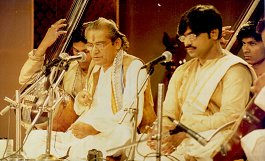
Sawai Gandharva Sangeet Mahotsava is a famous and important music festival held every year in Pune in the month of December. The festival was started in 1953, to commemorate the first death anniversary of Sawai Gandharva, the noted Hindustani vocalist. Well known musicians and even practicing artists gather in Pune to pay homage to the great musician in the form of this colourful festival. Each year the festival is organized by the disciples of Sawai Gandharva with the support of Arya Sangeet Prasarak Mandal and continues for 3 days. Artists including vocalists, dancers and musicians from all over India of all the gharanas arrive at Pune to show their talent. 

Festival History

Rambhau Kundgolkar popularly known as Sawai Gandharva was a noted Hindustani vocalist who passed away on September 12, 1952. A private concert was organized on the sixteenth day after his death where his noted disciples Smt Gangubai Hangal, Pandit Feroz Dastur and Pandit Bhimsen Joshi performed. To commemorate his first death anniversary, his disciples organized a music festival under the patronage of Arya Sangeet Prasarak Mandal. Witnessing the grand success, this festival became an annual ritual in Pune and it eventually grew exponentially. Today Sawai Gandharva Music festival is one of the important and prominent music festivals of India.

Initially performers only from the Kirana gharana would perform, but today artists from all gharanas take it as a pride and honor to perform in this festival. To perform on the stage of Sawai Gandharva festival signifies the ‘advent’ of an artist in the scene of Indian classical music. Not only famous musicians perform here but people who have attained masters in their chosen field of music also get a chance to display their talent.

The festival today is a hallmark in the annual cultural calendar of Pune. The Arya Sangeet Prasarak Mandal who started the festival also had the intention of reviving Arya Sangeet Vidyalaya which was founded by Ustad Abdul Karim Khan in 1910, but became inactive by 1947. The original founders of the Arya Sangeet Prasarak Mandal were Nanasaheb Deshpande, Dattopant Deshpande, Shri BalasahebAtre, Abasaheb Mujumdar, Hirabai Badodekar, Kamlabai Badodekar, Saraswati Rane, Sureshbabu Mane, Shvrampant Divekar, Viththalrao Sardeshmukh, V.S. Sathe, D.V.Natu, Abasaheb Atre, Pandurangshastri Deshpande, Vamanrao Deshpande, Vasantrao Deshpande and Vamanrao Abhonkar. The festival is concluded by a grand performance of Pandi Bhimsen Joshi.

About Sawai Gandharva

Rambhau Kundgolkar known as Sawai Gandharva was born in 1886 in a town named Kundgol in Karnataka. Although he did not belong to a musical family, he showed deep interest in music from his early days and started
training under Ustad Abdul Karim Khan. He was much impressed by the singing talent of the young boy and started the arduous task of teaching him the nuances of Indian classcial music. His long hours of training in voice culture made Rambhau a confident vocalist. Later he also learnt from other teachers like Bhaskarbuva Bakhale and Nasir Hussain Khan of Gwalior gharana. His intense training polished his voice further.

After his training, he got married and returned to his native twon where he joined a drama company. He became a popular singer in the company and earned the title of Sawai Gandharva. It was under him and another disciple of Ustad Abdul Karim Khan, Sureshbabu, that the Kirana gharana became popular. He started training several students who later on became noted musicians like Bhimsen Joshi, Basavaraj Rajguru, Feroze Dastur and Gangubai Hangal. After his death, following a paralytic attack in 1952, his disciples led by Pandit Bhimsen Joshi started the famous Sawai Gandharva Sangeet Mahotsav under the patronage of Arya Sangeet Prasarak Mandal

Famous gharanas

Gharanas in Hindustani classical music mean a system of
social organization connecting musicians by music style, lineage or apprenticeship. Some of the best known vocal gharanas include Gwalior gharana, Agra gharana, Kirana gharana, Jaipur-Atrauli gharana and Rampur-Sahaswan gharana. Pt. Achchan Maharaj (Jagannath Maharaj is a famous exponent of Lucknow gharana, Ustad Masit Khan, Jyan Prakash Ghosh, Keramatullah Khan are exponents of Farukhabad gharana.

Tansen Samaroh

The famous Tansen Sangeet Samaroh is celebrated every year on the Tansen Tomb in Gwalior India. Tansen Samaroh is a platform where artists from all over India, gather and participate to deliver vocal and instrumental performances. Complete environment during the festival turns mystical with melodious music echoing. Music lovers from far and wide make it a point to be a part of this event at any cost, as it’s a remembrable experience for them.

The Tansen Sangeet Samaroh is organized by the government of MP, in association with the Academy of the department of culture in MP.

During the festival music lovers and artists from all over the world gather here to offer their bit of tribute to the all time music Maestro Tansen.

Till date this festival has the honor of being the first and only musical sow that goes for days and nights.

The academy offers honors to senior celebrities and junior artists by including them in the Samaroh through their music of performance.

Tansen was a legendary singer of Akbar’s mughal court. Tansen, a legendary exponent of the Hindustani classical music's dhrupad style, was counted amongst one of the nine jewels of the royal court.

The magic of his honeyed voice was so intense that it made clouds rain with joy. His ragas (melodies) would light up lamps and held birds and animals spellbound. In remembrance of this exemplary artist there is a tomb constructed in Gwalior called the Tansen tomb. This is where the Tansen Music Festival or the Tansen Samaroh is organized every year. This annual music festival started way back in 1930's.


The passage of time has only glorified the status of this annual historic event. At present renowned artists from all over the country come here to perform and exhibit their excellence in turn mesmerizing the audience. The venue Gwalior, so chosen has retained Indian traditions and the wealth of music intact over the years. The famous Gwalior Gharana of music is actually inspired by the Tansen style of Music.

In all, the four day musical extravaganza called Tansen Samaroh is an audio as well as visual treat, seeing the exemplary and renowned music expertise in artists all over India dedicating their bit of honor to the greatest ever musical mentor Tansen.

Time of celebration:

The Tansen Music festival or Tansen Samaroh is held every year in the month of December. The experience of melodious music with chilling weather of autumn makes it an ecstatic one.


Tarpa Festival

Tarpa Festival derives its name from the famous and extremely popular folk dance of Dadra & Nagar Haveli- the Tarpa Dance.

Tarpa dance is particularly famous amidst the Varli, Kokna and Koli tribes of Dadra and Nagar Haveli.

Dadra and Nagar haveli is famous for the existence of various tribes with different, amazing culture and traditions.

Although all through the state these tribal dances and festivals are celebrated with great enthusiasm, Silvasa celebrates these cultures and traditions with deep devotion.

Tribal festivals and events include boat and swimming races, and folk dance, Rangoli and tattoo painting competitions. Cultural programs and dances are held in the evening. Tarpa Festival is indeed a cultural Fiesta with the tribal culture and traditions being displayed at its best.

The festival is celebrated every year in the month of December. In 2009, it will be celebrated on 26th December – 31st December.

Tarpa Dance:

Tarpa dance is an extremely popular dance of Dadra and Nagar Haveli. It is mainly a tribal dance. The dance performances are usually done on moonlit nights.

With the musical accompaniment of a wind instrument named Tarpa, the dancers encircle the ‘Tarpakar’ and they dance past mid night. The dance performed by the villagers is a true mirror to their unity and coordination. All the participants join hands and swing in circles while singing themselves.


Ice Skating Carnival

The Ice skating Festival is held annually at Shimla in Himachal Pradesh.

As the name suggests number of Ice skating expeditions are planned and organized by the state administration.

Over the years the carnival has gained immense popularity as thousands of tourists and participants come here durink the carnival not only to participate but even to be part of this mega carnival for the sake of fun and entertainment.

Himachal Pradesh is known fore its serene natural beauty and landscapes. 

It is so popular among the holiday destinations in India that it is also termed as “Abode of God”. he location of the state amidst the snow-clad ranges of the Shivalik, Dhauladar, Pir Pinjal and the Great Himalayas makes Himachal ideally suited for a number of winter sports which are packed with excitement and thrills.

Ice-Skating in Himachal Pradesh is one of the most sought-after winter sports that the state offers. The mountains are fully covered with snow durink winters making it a perfect location for ice-skating.

Durink winters numbers of ice skaters gather here to simply enjoy the sport of ice-skating as very few places in India facilitate the sport. The sports carnival organized in Shimla every year attracts thousands of people. The carnival generally starts in December and continues till February.

This is the best time to enjoy the snow clad mountains of Himachal Pradesh as much of the snow becomes hard and ideal for skating. The ice skating rink at Shimla is supposed to be the largest open-air in India. Not only people from India but even foreigners are seen here participating and enjoying the winter carnival.

Ice skating is a sport similar to skiing, the only difference being that in skating instead of swooshing down snow-covered slopes, you glide along a wide skating arena wearink ice-skates. You can skate with a partner or do it alone. But ice-skating is a sport that requires much better balancing prowess than required in ordinary skating.

Although the Basic equipments like skates, cap, kneepads etc. are available at the rink, yet some of the professional skaters brink their own equipments and necessities with them. At the carnival two sessions are held every day for the competitions, one in the morning and one in the evening.  


Teesta Tea & Tourism Festival

The Teesta Tea and Tourism Festival, celebrated in splendid manner in the tranquil serenity of the hills of Darjeeling.

The Festival is celebrated in series at Darjeeling, the Dooars and in Sikkim with a motive of promoting tourism heritage of these places.

The Teesta Tea and Tourism Festival in Darjeeling is jointly organized by the West Bengal Tourism, Darjeeling Gorkha Hill Council and Sikkim Tourism and supported by the Govt. of India Tourism along with the Private Tour Operators and Hotel owners.

Celebration
Teesta Tea & Tourism Festival is organized amidst the hilly areas of Darjeeling. Darjeeling is the beautiful place laden with the long stretch of tea gardens producing “champagne of the east” – Tea.

The festival is celebrated in the grandiose manner and witnessed by large number of people including locals and tourists from distant places. This festival is full of excitement and fun filled activities like food carnival, film fest, toy-train ride, Water sports, visit to sanctuaries, nature walk etc.

The calm hilly area attains the different dimension with wonderful color and music of festivity. The festive aura of this occasion refreshes every one visiting this Teesta Tea & Tourism festival.

Time for celebration

The Teesta Tea & Tourism festival is one of the major festivals in the northern part of West Bengal and organized in the months of November – December to attract large number of tourists.